
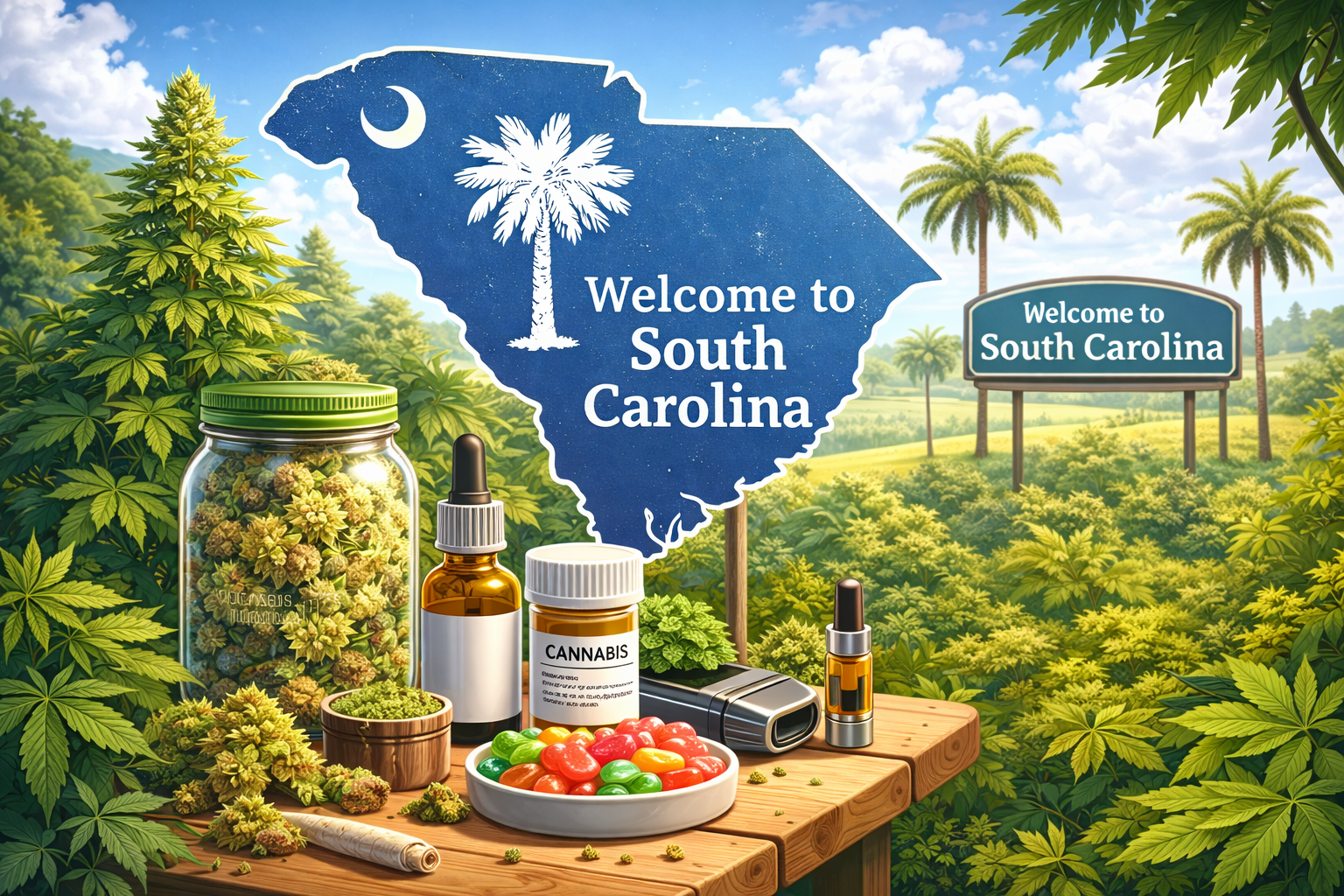
Trying cannabis in South Carolina for the first time can feel confusing because of changing laws, many product types, and mixed information online. This guide walks beginners through what they need to know in 2026: legal basics, product options, safe dosing, and how to choose trustworthy ways to buy.
Cannabis laws in South Carolina in 2026
South Carolina has a more conservative approach to cannabis than many other U.S. states, which is why beginners must understand what is allowed before they buy or consume anything. While federal and state rules can feel contradictory, the key point is that cannabis remains tightly regulated, and penalties may still apply for certain forms of possession, sale, or use.
It is important to distinguish between high-THC cannabis (which produces a noticeable “high”) and low-THC or CBD products, since they often fall under very different legal frameworks. Beginners should always check current state laws, age restrictions, and local ordinances in cities like Charleston, North Charleston, and Rock Hill before ordering or carrying any cannabis-related product.
THC vs CBD: what’s the difference?
THC (tetrahydrocannabinol) is the main psychoactive compound in cannabis that creates the classic high, euphoria, and changes in perception. CBD (cannabidiol) does not produce the same intoxicating effect and is often used for relaxation, discomfort, or sleep support without a strong mental “lift.”
For beginners in a legally complex state like South Carolina, CBD or low-THC products are often a safer first step, both legally and in terms of sensation. Many first-time consumers find that starting with CBD-dominant options reduces the risk of anxiety or paranoia that can sometimes appear with high-THC strains.
Main product types for beginners
New users in South Carolina will usually encounter four main categories: flower (buds), vapes, edibles, and tinctures/oils. Each has a different onset time, intensity, and difficulty level for dosing, which is crucial for a first experience.
- Flower (bud).
Smoked in joints, pipes, or bongs, flower offers a fast onset (minutes), making it easier to notice effects and stop if it feels too strong. However, dosing is less precise, and smoking may not appeal to everyone for health or comfort reasons. - Vapes (cartridges and pens).
Vaping is discreet, with less smell and a quick onset similar to smoking, but it can lead to accidentally consuming too much because the vapor feels smooth and pleasant. Quality control is critical: beginners should avoid unregulated cartridges and choose lab-tested products only. - Edibles (gummies, chocolates, baked goods).
Edibles are popular for their taste and smokeless delivery, but they are the easiest way for beginners to overdo it. The effects can take 30–120 minutes to appear, and once they start, they last much longer than smoked or vaped cannabis. - Tinctures and oils.
Taken under the tongue or added to food, tinctures allow more precise dosing and slower, controlled onset. Many first-timers appreciate being able to measure drops or milligrams instead of guessing by puffs or pieces of edible.
Safe dosing: “low and slow”
For a first cannabis experience, the most important rule is “low and slow.” With inhaled products (flower or vapes), beginners should start with one or two very small puffs, then wait at least 10–15 minutes to gauge effects before considering more. This approach reduces the chance of sudden anxiety, racing heart, or overwhelming intoxication.
With edibles, the safe starting range is typically 1–2.5 mg of THC, especially in a state where regulations and product consistency may vary. New users should wait a full two hours before re-dosing, even if they “don’t feel anything” at first, because the delayed onset can catch people off guard and lead to an uncomfortable several-hour high.
If someone does take too much, the best response is to stay calm, drink water, rest in a quiet, safe environment, and remember that the effects, while unpleasant, are temporary. CBD-only products or those with higher CBD content can sometimes take the edge off a strong THC experience.
Where and how to buy safely
In South Carolina, the cannabis landscape is evolving, and access options can differ between cities such as North Charleston, Charleston, and Rock Hill. Guides on topics like buying marijuana online in North Charleston, using mail-order cannabis in Charleston, and finding THC in Rock Hill already highlight how residents navigate local availability.
When choosing how to buy, beginners should consider three main aspects: legality, product quality, and safety. Licensed or compliant sources are more likely to provide lab-tested products that clearly display THC and CBD levels, ingredients, and contaminant testing, which is essential for predictable dosing.
Online and mail-order options can be convenient and discreet, especially for those who prefer not to visit physical locations. However, it is crucial to verify reviews, check for transparent lab reports, and avoid platforms that make unrealistic claims or hide their contact details. Local, compliant shops or dispensary-style outlets (where available) offer the advantage of in-person advice from staff who can explain products and help beginners select mild options.
How to choose your first strain
South Carolina beginners quickly encounter the classic categories: indica, sativa, and hybrid. Indicas are often associated with body relaxation and evening use, sativas with energy and uplift, and hybrids with a mix of both effects. The existing article “Hybrid Strains: Balancing Indica and Sativa” already explains why many consumers prefer the middle ground.
For a first experience, hybrid or CBD-dominant strains are generally safer choices than very strong indicas or high-THC sativas. Hybrids like Kandy Kush or Lady Madonna can offer a combination of mood elevation and physical ease, but beginners should still use very small doses, especially if the THC levels are high.
New users should also pay attention to terpene profiles and flavor descriptions in strain reviews. Sweet, citrus, or mild earthy notes tend to feel more approachable, while heavy fuel or skunk aromas may be less pleasant to someone just starting out. Strain reviews on the site help beginners understand not just potency, but also taste, aroma, and typical user experiences.
Practical tips for a positive first experience
Beyond laws, products, and dosing, setting and mindset matter just as much. Beginners should plan their first session in a safe, comfortable location where they do not need to drive, work, or handle responsibilities for several hours. Trusted company, calm music, and light snacks can make the experience more enjoyable and less intimidating.
Storing products correctly is also important: keep them in a cool, dark place, out of reach of children and pets, and in clearly labeled containers so they are not mistaken for ordinary food. When in doubt, less is more—there will always be another day to try a little more, but it is hard to reverse an overly strong dose in the moment.
By understanding South Carolina’s legal context, choosing beginner-friendly products, and following simple safety rules, new consumers can explore cannabis with far more confidence. Used thoughtfully, it becomes less of a risk and more of a controlled, intentional experience that fits their lifestyle and comfort level.